Tuesday, February 19, 2013

Musings: Abuse Chronicles

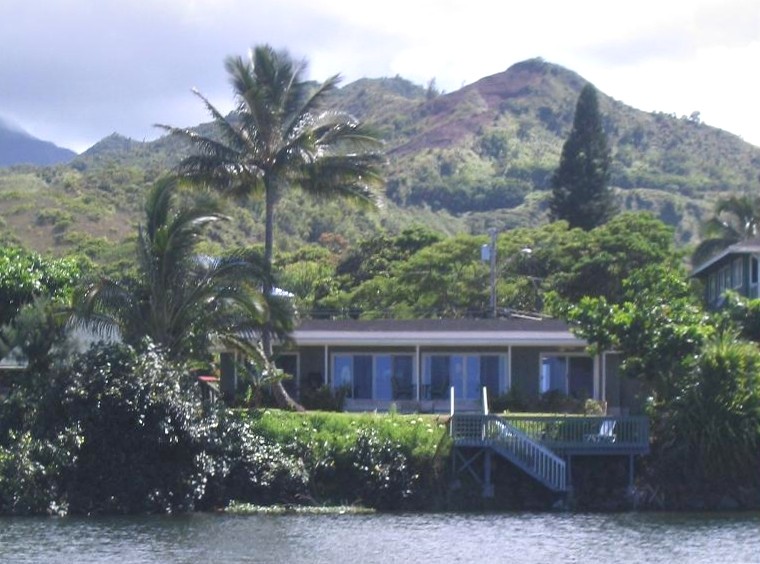
Have you ever wondered how, exactly, the North Shore of Kauai has been transformed from an enclave of small beach homes to a resort destination crowded with multi-million commercial properties operating under apparently fraudulent vacation rental permits? Here's a story that chronicles that evolution:

Once upon a time — June 16, 1972 to be exact — Miki Kaipaka got a building permit valued at $21,000 to construct a 1,456-square-foot house with three bedrooms and two baths on the Wainiha River.

Twenty years later, Peter Vollman bought the house for $490,000. It was advertised in the MLS listing as:

“AFFORDABLE OCEANFRONT, JUST REDUCED FROM $750K TO MEET RECESSION MARKET!! MUST SEE TO BELIEVE THIS DELIGHTFULLY LIVEABLE WITH OUTRAGEOUS VIEWS! OWNER FINANCING! FIREPLACE!

In 2002, Vollman Limited Partnerships sold the house for $600,000 to Craig and Karen Mills. Though county records show permits had been issued only for a fence and minor hurricane repairs in 1993, the sales listing indicated that other changes had been made (emphasis added):

Oceanfront 3bd/2ba home completely renovated enjoy spacious living room w/sliding glass windows & private deck. Fireplace, A/C, 6 ft wood fence, elec gate. Big ocean views.

Over the next three years, the house went through an even more dramatic transformation, though again, county records show no building permits were issued for any of the work. When Victoria Anne Leadley bought it for $1.475 million in 2005, it was described in the sales listing as having three bedrooms, three baths and a 560-square-foot lanai:

Remarks: Sometimes oceanfront, this home was completely rebuilt--inside and out--with the very best of everything. Travertine floors (including the lanai), marble baths, fantastic kitchen with granite countertops and stainless steel appliances. Two master suites, each with double lavatories and oversize doorless walk-in shower. A truly luxurious property in a unique location. Wonderful artist neighbors on both sides. On the Wainiha River with a spit of sand between you and the ocean. A dock for your kayak, and a large lanai for enjoying it all! Furnishings are separate from sale.

Private Remarks: Call for viewing instructions. House is in vacation rental. This is not the house you remember. The new floor plan, renovations, and decor will astonish you and your clients. Plan to spend a bit of time sitting on the lanai to appreciate the ever-changing view.

Today the house is again for sale — for $2.579 million. So why, you may ask, has it increased so substantially in value, even though the market is down? Well, it's got a bona fide vacation rental permit now. And as Realtor Jane Abramo discloses in her current listing, it has some new structures, too, though again, no record could be found of any permits: 

Remarks: Kauai Paradise House. This lovely home is a must see. This is a very successful and fully permitted vacation rental. TVNC-1266. All vacation rental reservations, preferential VRBO status, plus separate targeted website are being sold with the property. Recent upgrades include a new 200 square foot front lanai, expanded 600 square foot covered back lanai with travertine tile, 150 square foot deck above the river, a brand new roof, fresh paint inside and outside, new fencing and tropical landscaping. This meticulously renovated private oceanfront retreat on the North Shore of Kauai in Wainiha is perfect for short or long-term getaways for family or friends seeking luxurious accommodations with majestic views. Discover the relaxing elegance of Kauai, where hectic modern life is a remote memory and tropical splendor is your reality. Lovingly refurbished on a private, fenced lot nestled at the edge of the breath-taking Pacific, Kauai Paradise House boasts its own exclusive beach, panoramic views, elegant Tommy Bahama furniture, opulent travertine tile floors, 3 suites with 3 marble bathrooms (1 in each bedroom for the ultimate in intimacy), gourmet stainless-steel and granite kitchen with bar seating, built in convection oven and microwave, plus trash compactor. A vaulted-ceiling soars over the great room with wrap around sofas and hidden armoire entertainment center. The living room and separate dining area lead out to a covered lanai for the BBQ with couches for intimate conversations, and seating and table for alfresco dining, lush tropical backyard landscaping with coconut, ginger, avocado and palm trees, a secluded sun deck, and your own boat dock. Soak in unparalleled views of the river, the sandbar and the deep blue of the Pacific Ocean from every room. There's nothing left to do but take possession. All showings subject to 48 hour notice if the home is occupied by vacation guests.

As an aside, the “exclusive beach” that Jane is falsely hawking — all beaches in Hawaii are public, which she surely must know — just so happens to be the same little sand spit where the county bulldozed fishing shacks belonging to Native Hawaiians three years ago. 

Though the house was being used as a vacation rental when Leadley bought it in 2005, the county did not pass a law authorizing TVRs until 2008. In order to qualify for a permit, a house had to be in compliance with federal flood rules and the county Special Management Area law. Owners were also required to prove they had a General Excise license, and had been paying taxes on the rental. Furthermore, all building permits had to be up to date, and the property was supposed to be inspected to ensure that everything was kosher.

However, that property's TVR application included no records of “occupancy and tax documents, including all relevant State of Hawai‘i general excise tax filings, all relevant transient accommodation tax filings, federal and/or State of Hawai‘i income tax returns for the relevant time period, reservation lists, and receipts showing payment,” as required under the county ordinance.

Instead, an unsigned lease was submitted as “evidence” of rental history, even though the document clearly states, “This lease is not valid unless signed by tenant and agent.” Leadley also submitted a signed and notarized affidavit swearing that building permits were issued for all the structures on the property, and “there were no expansions, alterations, improvements or uses contrary to State and County land use and planning laws.”

And though the county TVR log shows an inspection date of March 18, 2009, no inspection report was included in the file.

Yet somehow, Leadley got her TVR permit. Former deputy planning director Imai Aiu approved her application, using the same form letter that appears in numerous other TVR files.

Curiously, though an inspection report was included in Leadley's most recent renewal application, it was blank.

Now, bear in mind that this house is still served by a cesspool, and it also sits in the flood plain. Under federal law, if a house is significantly altered, it must be brought into compliance with the 1981 federal flood standards. But since no building permits were issued for the complete re-do — not even the bogus “unsubstantial improvement” permits that I exposed previously on PIKO — it still does not meet flood standards.

Yet the property has a TVR permit for life, so long as the subsequent owners continue to send in their renewal applications — a benefit that added a cool $1 million to the value of the house.

It's worked out great for Leadley, and the realtors. But about what the community, the natural environment? Are either well-served by having a non-conforming commercial use too close to the ocean and a river? And what about the unsuspecting tourists who rent it, including the Canadian man who recently jumped to his death off that unpermitted deck?

After I first reported the lack of building permits for the property, I sent an email to planning director Mike Dahilig asking what actions his department was going to take. He replied, “I have cc-ed [county spokeswoman] Beth Tokioka on this e-mail and she will be heading our response.” Beth replied, “The Planning Department is investigating the situation and has no conclusions to report at this time.”

Since then, I had a chance to dig into the TVR file, where I found these additional irregularities. Perhaps it's time for county Prosecutor Justin Kollar to launch his own investigation. Because it sure seems like something fraudulent is happening here. And as I will show in upcoming posts, this is not an isolated incident.

Sunday, February 17, 2013

Musings: Sighs

I love this wild and windy weather, when the albatross and iwa soar effortlessly and the curls are shorn from the tops of waves and the ironwoods murmur and sigh.

So much to sigh about, like Senate Bill 1342, which would allow the state government to seize your assets — including land — for conviction of petty misdemeanors like harassment, attending a protest or having a couple of joints. Here comes da clampdown. As Big Island Now reports:

“S.B. 1342 expands asset forfeiture to petty misdemeanors, which means that individuals who commit minor crimes, such as trespassing on private property or staying in a park after hours, are subject to asset forfeiture,” said Laurie Temple, a staff attorney and legislative program director for the ACLU of Hawaii.
The way forfeiture works is they snag your stuff and you've gotta prove it wasn't used in a crime. Sen. Malama Solomon, one of the architects of the PLDC, introduced this crappy bill, which is so bad that even Hawaii Island Prosector Mitch Roth labeled it “Draconian.” Yet it's still headed for the Judiciary committee. Ever get the feeling lawmakers aren't really working for you?
Meanwhile, Hilo High School librarian Amy Okuyama doesn't want Big Island peace activist Jim Albertini to say anything bad about the military or give information on how to protest its activities when he speaks to students there next month. In an email sent to instructor Joseph Watts, Okuyama writes:
I respect Mr. Albertini and the freedom of speech, but within the library, I want assurance that he will be objective and factual. I'm concerned that this will not be the case for the simple fact that Mr. Albertini not known for his objectivity and is very out-spoken about his views. If the presentation will be strictly informational with zero negative slants, I will be fine with having the speaker. However, if it turns into a forum of Mr. Albertini's personal negative views/examples to our students, I will be against library use for the subsequent presentations. Again, I welcome him, providing he remains objective and dispassionate, just present the facts of the "history of military presence in HI. etc...." without diversion into any negative viewpoints.
Of course, just the facts is pretty damn damning, as I've reported at length. But since when does a school librarian get to be an arbiter of campus free speech? Is she, a self-described “military mom,” even able to determine what is truly a "negative viewpoint" or "objective?" Meanwhile, the recruiters and JR-ROTC get to present their propaganda unchecked. And we wonder why kids don't learn any critical thinking skills....Not that we actually want them to have any.
The St. Regis Hotel made some new enemies on Friday night when it set off fireworks from the beach for a private party, creating a din that folks as far away as Haena and Wainiha likened to military bombs or continuous loud thunder. One resident termed it “Totally rude and intrusive.” But since when has that stopped any activity that caters to the North Shore tourists?
As a beekeeper — and human who likes to eat — I'm getting very nervous about the future of honey bees. The most recent alarm was sounded by San Francisco Gate, which reports there's a shortage of crucial pollinators for the soon-to-bloom California almond crop. Some 2 million bee colonies are trucked to the Central Valley from all around the nation, but even that's not enough to meet the demand. Already reeling from drought, colony collapse disorder, loss of forage due to ethanol production, transit shock and pesticide exposure, the poor bees must work faster and harder.
You know, the highly efficient industrial model, applied to animals and agriculture. As UC Davis bee specialist Eric Mussen so astutely notes:
"When you stress them far enough, the bees just give in."
Meanwhile, the slave laborers are fed sugar and GMO high fructose corn syrup because their keepers steal all the honey. Not surprisingly, some beekeepers lost 75 to 99 percent of their hives this past winter, and many of the surviving hives are weak. But instead of saying, OK, let's step back a minute and change this sick scene, the high-pesticide-using almond growers are looking at ways to ace honey bees out of the picture, as in developing a "self-compatible" almond tree, which can set nuts using pollen transferred among its own flowers, thereby needing fewer bees.
But in the meantime, the almond industry still depends on bees, so they'll pay the beekeepers more to work their bees harder and then kick 'em all aside when they've sucked every last drop of honey and energy from them.
Because who the fuck needs nature, anyway? We've achieved better living through chemicals. Or so the seed-mutilating chemical companies would like us to believe.
Not everyone, however, is drinking that Kool-Aid. It's really good to see the younger generation, and especially the local kids, speaking out against pesticides and GMOs, as in this rap video by Hood Prince, "Monsanto, You Gotta Go." And Syngenta, DOW, DuPont, BASF and all the rest.
If you'd like to get up to speed on the whole GMO issue, check out the primer I did for Honolulu Magazine back in 2005. I posted it over on my other site, PIKO. At the time it was published, Hawaii had hosted more than 4,500 open-field tests for experimental GMO plants — more than any place in the world — and the seed industry was valued at about $50 million in Hawaii. It's now worth $220 million, as in quadrupled in eight years, as in getting more and more entrenched. 
As I reported then, people were asking such questions as:
What is being grown, and where? Will transgenics harm people, animals, the environment? Do the potential benefits outweigh the possible risks? Are existing regulations adequate, or properly enforced? Can GMOs be prevented from going places where they're not supposed to be?
Sadly, we're still asking the same questions, because nobody — not our lawmakers, not state or federal regulators — are making them cough up any answers. Sigh....
But eventually, it's all gonna come out.

Thursday, February 14, 2013

Musings: Bee Love

I like Valentine's Day because it's always great to put the emphasis on love. I just can't understand why it's so often celebrated with such unloving commodities: blood diamonds, chocolate harvested with child labor, gold extracted in toxic ways and flowers raised in South America through practices that exploit women and use heavy applications of pesticides.

Unfortunately, we have heavy applications of pesticides happening right here, in the GMO fields that now stretch from Lihue to Mana. And as National Geographic reports, some of those very same pesticides, particularly imidacloprid, are apparently contributing to the demise of honey bees, a crucial pollinator:

A new study shows that long-term exposure to a combination of certain pesticides might impair the bee's ability to carry out its pollen mission.
"Any impairment in their ability to do this could have a strong effect on their survival," said Geraldine Wright, a neuroscientist at Newcastle University in England and co-author of a new study posted online February 7, 2013, in the Journal of Experimental Biology.

This study shows that when pesticides are combined, the impact on bees is far worse than exposure to just one pesticide.
Opposition to the pesticides used in the GMO fields is just one reason why folks rallied against GMOs yesterday. It was a sizable and lively crowd that lined the sidewalks on both sides of the Safeway intersection in Kapaa during the crush of pau hana traffic.

You can check it out in a video set to Makana's anti-GMO song, which has such salient lyrics as these:

Here comes the story of the GMO
 It’s on your plate and you probably don’t know 
And no real tests were ever done 
Just a big PR push and one company controls the food of all the world
The regulators ain’t workin’ for you 
They sold you out and you ain’t got a clue 
“It must be safe” I heard you say 
“I don’t believe they’d ever play with the health of our children,
would they?”
Monsanto and the others all make great claims
 Of feeding the world… and pests they overcame 
But yields are shrinking and the pests are getting bigger
 And no one knows what’s coming cause they pulled an early trigger
Remember the butterflies and bees that all died
 And the quarter million farmer suicides 
You think you might start asking why? 
So many living things would die from a thing that’s meant to feed the world
And all the cheerleaders talk of ending world starvation
 But it ain’t from lack of food, it’s from economic segregation
 They say Genetic Engineering is old as growing food 
But we know it ain’t the same in fact it’s way more crude
It ain’t science when you’re aiming a gun
 And praying the DNA don’t come undone
 They’re playin’ cowboy with our genes 
Ignoring all the unforeseen risks, they made a laboratory of Kauai
50 nations label transgenic food
  But out here in the US the consumer’s gettin’ screwed 
It didn’t change the price of food to label it elsewhere
 Now they’re spending millions just to keep us unaware
This is the story of the GMO 
It’s on your plate and you probably don’t know
 There never was a dry run 
Put on a grocery shelf, not one test to prove the safety of the food
Wake up, everybody. Time to bee love, before it's too late.

Wednesday, February 13, 2013

Musings: Speaking and Silence

It speaks volumes that the owners of Coco Palms didn't even bother to request a permit extension until Feb. 6, nearly two weeks after the permits had already expired. The county has cut that property so much unwarranted slack over the past two decades that it's no surprise the owners were still expecting latitude. The question now is how long the county will dither before ordering the owner to take down those decaying, decrepit buildings.

Speaking of revoking expired permits, I was chatting with a Honolulu attorney yesterday, and he was wondering how the county thought it could get away with its unprecedented interpretation of the SMA permit for the Wailua Beach portion of the Path. The permit, which was issued in 2007, specified work must begin in two years and be pau in four, which the mayor's team is interpreting to mean a total of six years. “I've never heard of anything like that,” said the attorney, who does a lot of land use work. “Boy, are they opening a can of worms.”

Speaking of worms, the County Council today is being asked to approve $25,000 for special counsel's “continued services” to represent former Prosecutor Shaylene Iseri-Carvalho in the civil suit filed by Councilman Tim Bynum, and another $50,000 to represent planning inspector Sheilah Miyake.

So is this gonna be the one lawsuit against Shay that the county will actually fight rather than settle? Not that I wouldn't enjoy the spectacle of court proceedings, or learning more about the role that former Councilman Kaipo Asing planned in this whole debacle and the planning department's uneven application of the inspection process.

Shifting gears, I recently ran across an intriguing and poignant essay entitled, ““Hawaiian at Heart” and Other Fictions.” Posted on the Facebook page "Huna is not Hawaiian," which you can read about here if you're not on FB, the essay gets right to the core of some key issues, as these excerpts reveal:

The most widespread American mythology about contemporary and historical Hawai‘i revolves around the vision of the melting pot, a multicultural paradise where elements from every group combine into a rich whole that all can share.

The pleasure of this vision erases a violent, coercive, and tragic history. The multiplicity of races and cultures in contemporary Hawai‘i was born in the deliberate attempt by plantation owners to divide and conquer their workforce. Differences in language and culture were meant to prevent cross-racial organizing and solidarity among workers. This multiplicity of culture was also built on the bones of dead Hawaiians. By the most conservative estimates, the importation of diseases from Cook’s men and all the westerners who followed killed 90 percent of the Native Hawaiian population within a hundred years. The population collapse, from 300,000–800,000 Hawaiians in 1778 to fewer than 40,000 in the 1890s, created a gaping emptiness that was filled with non-Hawaiian immigrants

Hawai‘i has been sold endlessly as a place of exotic escape from real life. As a direct consequence of overexposure in the tourist market, Hawai‘i and all things Hawaiian have become kitsch.

Some Hawaiian-culture aficionados cross a line and begin to claim a Hawaiian identity, either as Hawaiians who mysteriously cannot locate or discuss their families, or as “Hawaiians at heart,” an ultimate appropriation, which has unfortunately been supported by too many Hawaiians concerned about others feeling left out. Being Hawaiian for non- Hawaiians carries no history of pain and loss.

“Hawaiians at heart” are joined by “Hawaiians of the spirit” in the New Age spiritual industry’s marketing of “huna” practices. Like the American Indian–focused plastic shamans, it never seems to occur to these Huna practitioners that if their “Huna” was secret ancient Hawaiian healing, perhaps it should be directed first and foremost to Hawaiians, who have among the worst health demographics in the United States.

The disrespect, exploitation, and cultural distortion and appropriation of Hawaiian culture and identity would be hard enough to deal with in the best of times—but these are not the best of times for Hawaiians.

The ignorance of the US public about issues of sovereignty and the trust lands of the Hawaiian people, the miscategorization of indigenous issues as “racial,” and the right-wing resistance to “minority rights” have brought us to a point where Hawaiians are in great danger of losing the limited entitlements that already exist, much less the immensely greater resources and rights to which we are legally entitled and do not currently receive. We are Hawaiian at heart, history, and bone, in ancestor and child. Moke Kupihea has reminded us, “The past does not disappear, it is merely silenced” (2001, 124). As contemporary Hawaiians we are charged with filling that silence because others are too willing to fill it for us.

Tuesday, February 12, 2013

Musings: Moral Injury

I've been thinking about the concept of morality lately, what with all the recent talk about the necessity, the desirability even, of inflicting death by drones; the President's proclaimed personal power to kill whomever, wherever — including his own citizens — on the flimsiest of suspicions, no actual evidence or trial needed; CIA Director-nominee John Brennan's waffling on whether waterboarding amounts to torture. The issue of morality has also come up in discussions on same sex marriage and adult personal use of marijuana, with some church groups labeling both as "immoral." 

Meanwhile, we keep ignoring the elephant in the room: the immorality of war, and the “moral injury” that we are inflicting on the men and women sent to off to fight. In a Washington Post opinion piece, Marine Capt. Timothy Kudo discusses honestly, hauntingly, the moral conflict  that our soldiers suffer when we teach them killing is wrong, but send them off to kill. After telling of how his patrol mowed down two teens on a motorcycle in Afghanistan, mistakenly thinking they were armed, he writes:

It’s been more than two years since we killed those people on the motorcycle, and I think about them every day. Sometimes it’s when I’m reading the news or watching a movie, but most often it’s when I’m taking a shower or walking down my street in Brooklyn.
They are not the only deaths I carry with me. I also remember the first time a Marine several miles away asked me over the radio whether his unit could kill someone burying a bomb. The decision fell on me alone. I said yes. Those decisions became commonplace over my deployment. Even more frightening than the idea of what we were doing was how easy it became for me. I never shot someone, but I ordered bomb strikes and directed other people to shoot.
Many veterans are unable to reconcile such actions in war with the biblical commandment “Thou shalt not kill.” When they come home from an environment where killing is not only accepted but is a metric of success, the transition to one where killing is wrong can be incomprehensible.

This incongruity can have devastating effects. After more than 10 years of war, the military lost more active-duty members last year to suicide than to enemy fire. More worrisome, the Department of Veterans Affairs estimates that one in five Americans who commit suicide is a veteran, despite the fact that veterans make up just 13 percent of the population.

While I don’t know why individual veterans resort to suicide, I can say that the ethical damage of war may be worse than the physical injuries we sustain. To properly wage war, you have to recalibrate your moral compass. Once you return from the battlefield, it is difficult or impossible to repair it.

I didn’t return from Afghanistan as the same person. My personality is the same, or at least close enough, but I’m no longer the “good” person I once thought I was. There’s nothing that can change that; it’s impossible to forget what happened, and the only people who can forgive me are dead.

I will never know whether my actions in Afghanistan were right or wrong. On good days, I believe they were necessary. But instead, I want to believe that killing, even in war, is wrong.

Veterans are the only ones who can explain the ethical impact of war. For me, this means being open and honest about the deaths I caused and how they have changed me.

As William Falk writes in The Week:

About 228,800 Iraq and Afghanistan vets have been officially diagosed with PTSD and another 100,000 are estimated to have the disorder. Only rarely do these invisibly wounded soldiers act violently; most wrestle privately with their demons, drink, rage at family members, unravel. “Moral injury,” clinicians are now calling the root of their anguish: a haunting feeling of shame and guilt for witnessing, and participating in, so much death and horror. When calculating whether the next war is worth it, let's not forget what we've learned of war's consequences, including what it does to the casualties who come home.

Can anything, really, be worth that?

Sunday, February 10, 2013

Musings: So Very Cozy

State Sen. President Donna Mercado Kim has appointed Monsanto lobbyist Alan Takemoto to a committee that will nominate candidates to fill two seats on the state Commission on Water Resource Management. The water board oversees use of this public trust resource.

Kim apparently sees no conflict in allowing Takemoto to serve on the committee, even though Monsanto tried to pull off a major water grab last year. The chemical company  unsuccessfully sought approval from CWRM to drill a new well that would have drawn 2.636 million gallons per day (“mgd”) of potable basal ground water from the Waipahu-Waiawa Ground Water Management Area. Monsanto currently takes water from the Waiahole Ditch. But it wanted to double dip so it could be assured of having an emergency back-up source for 2,052 acres of seed corn and other crops, according to the CWRM staff report. 

The Hawaii Independent reports Kim made the appointment at the request of Sen. Malama Solomon, one of the lawmakers who pushed the Public Lands Development Corp. It also reports that Solomon received contributions totaling $2,000 from Monsanto last year, while Kim got $1,000. In an earlier story, it reported that Monsanto attorney Yvonne Izu is a former deputy director of the water commission.


Takemoto currently serves on the state Agribusiness Development Corp., and the Board of the pro-biotech Hawaii Crop Improvement Association. He previously served on the Board of Advisors to the UH College of Tropical Ag while working as a lobbyist for the Hawaii Farm Bureau.

It's all so very cozy, isn't it?

Speaking of cozy, Grove Farm is trying to get 11,026 acres designated as Important Ag Lands, which means the company gets tax credits for keeping the acreage in ag. Though the law was intended to protect prime ag lands, Grove Farm admits that at least 80 percent of the land is rated D and E, as in marginally productive. But that isn't the only troubling aspect of its application. Grove Farm also wants IAL designation for three reservoirs — Papuaa, Halenanahu, and Kapaia — that do not serve the proposed IAL lands. They do, however, serve such decidedly non-ag uses as the Puakea Golf Course and Grove Farm's commercial and residential projects in Lihue and Kalepa.

So why the big stretch? I'm sure Grove Farm is hip to a little-known provision in the state law that gives IAL owners tax credits for "legal and other consultant services" for water. That's how Hawaii Commercial and Sugar and A&B were allowed to write off millions of dollars in lawyers and biological consultant fees, at the taxpayers' expense, to fight the community in the Na Wai Eha water allocation case on Maui.

That tax credit was jammed into the IAL law at the last minute by — who else? — A&B and the Hawaii Farm Bureau, which takes us back to Alan Takemoto.

Oh, yes. It's all so very cozy, while taxpayers, the land and the water are getting screwed.

Thursday, February 7, 2013

Musings: Ominous Omissions

A search of Kauai County documents finds no record of any permits authorizing extensive improvements to a Wainiha vacation rental, including the riverside deck/dock where a Canadian visitor drowned on Tuesday.

According to a county press release, Mark McLean “was found face down and unresponsive after jumping from a platform into the shallow water below.”
An online advertisement for the Kauai Paradise House transient vacation rental (TVR) suggests:

Rent a kayak (a local vendor offers 7 days for the price of 5!) and paddle right from the private dock to the private and peaceful white sandy beach, or paddle up the quiet Wainiha River to explore the lush green island.
Of course, we all know there are no private beaches in Hawaii, and that Wainiha River is far from quiet. In fact, the name means “raging waters.”
But that's not the only eyebrow-raising claim. The ad also states, emphasis added:
This entirely renovated private oceanfront retreat on the North Shore of Kauai in Wainiha on the edge of Hanalei is perfect for short- or long-term getaways for family or friends seeking luxurious accommodations with breathtaking views.
The Vacation Home: Newly renovated on the stunning blue Pacific Ocean, Kauai Paradise House is a truly unique oceanfront and riverfront property featuring its own private beach, oceanfront views, 3 king-bed suites (the third of which can be converted to 2 twin beds if desired), gourmet kitchen, travertine tile floors, 3 marble bathrooms, great room with entertainment center, covered lanai, lush backyard, and private deck and dock.
This sophisticated home with a resort feel boasts thoughtful touches throughout, including Tommy Bahama furniture, luxury linens, dual master suites with king-size beds and walk-in showers, new gourmet kitchen with top-of-the-line stainless-steel appliances
 (including toaster oven, blender and coffee maker), marble guest bathroom with large walk-in shower, spacious family room with TV and DVD/CD player, high-speed Internet, telephone, TVs and DVDs in every bedroom, gas BBQ on the covered lanai overlooking the deep blue sea, and private oceanfront deck with steps down to your own boat dock.
Sounds pretty flash. Realtor Jane Abramo's current sales listing for the house reiterates the “all new” verbiage:
Recent upgrades include a new 200 square foot front lanai, expanded 600 square foot covered back lanai with travertine tile, 150 square foot deck above the river, a brand new roof, fresh paint inside and outside, new fencing and tropical landscaping. This meticulously renovated private oceanfront retreat on the North Shore of Kauai in Wainiha is perfect for short or long-term getaways for family or friends seeking luxurious accommodations with majestic views. Lovingly refurbished on a private, fenced lot nestled at the edge of the breath-taking Pacific, Kauai Paradise House boasts its own exclusive beach. [WTF? Exclusive beach?]
Yet a review of real property tax records shows the property as having four bedrooms and two baths, not three suites. And an online search of county building permits shows that aside from the original 1972 construction permit, and some post-Iniki 1993 permits for a fence and minor electrical and plumbing work, there is no record of any permits for these recent upgrades and additions.
So when was this property transformed from a modest hale into a lavish “entirely renovated” vacation rental with a “resort feel” that is now on the market for $2.579 million, after having sold for $1.475 million in 2005? How much of that increased value is due to the TVR permit? And why are the property taxes just $ 2,133.80 per year?
More importantly, why did the county issue a vacation rental permit for this property when its building permits apparently aren't in order? Especially when these substantial improvements were made without complying with federal flood requirements, as is the case with a number of North Shore TVRs.
This is the kind of stuff that slips by when you don't conduct actual site inspections before issuing TVR permits. Yes, that inspection requirement was stricken from the most recent TVR bill, which was introduced by Councilman Tim Bynum and adopted by the Council after the infamous “beer gate.”
Of course, the owner is required to sign a notarized affidavit stating “Building permit number(s) were approved on ____ for all structures on the property and there were no expansions, alterations, improvements, or uses contrary to State and County land use and planning laws.” But how meaningful is that if the county doesn't check? Apparently about as meaningful as the farm dwelling affidavit. 
Sadly, it's the visitors who end up suffering from the lack of oversight and full disclosure. In the comments left on the Kauai Paradise House ad, one visitor noted:
Last, a suggestion; the step from the deck to the river was long, and slippery, especially at low tide. I would suggest one last step or a platform closer to the water.
Another visitor wrote:
We would definitely stay here again, especially when our infant daughter is old enough to go into the river on a floatie too. We put our toddler into her floaties and took her across [the river] to the beach and she loved it!
Meanwhile, the Jan. 12, 2013 Surfrider Kauai Blue Water Task Force report on enterococcus bacterial concentration per 100 ml showed Wainiha River at 173 for single day results and 369.9 for the winter geomean. The geomean should be less than 35, which means this is hardly the place where you'd want your young children to frolic.

So who does bear responsibility for ensuring our visitors are fully informed of the risks they face, and that the houses they rent for their vacations are safe and in full compliance with county laws?

Wednesday, February 6, 2013

Musings: What's Happening?

So let's see, what's happening out there aside from whales jumping on the horizon and brisk trade winds kicking up the surf along the eastside?

Well, James Alalem and Raymond Catania were arrested on charges of obstructing this morning at Wailua beach. The two had built a rock ahu to mark the location of a heiau along the route of the county's controversial Path and wanted to make sure it was not disturbed by construction crews.

Both men were released without having to post bail, according to Police Chief Darryl Perry. They are scheduled to appear in court on the petty misdemeanor charges at 8 a.m. March 20. Jimbo previously was convicted of interfering with a government operation when he attempted to stop a backhoe from digging up iwi kupuna to make way for a bathroom at Kaumualii Park by the Wailua River.

Why does the government constantly create these kinds of stand-offs with Hawaiians?

While we're on the topic of sacred land, Presley Wann, president of Hui O Makaainana O Makana, came on KKCR yesterday to announce that he had been “reassured by the state they are not going to do any kind of clearing, scaling or touching of Makana.” As you may recall, I previously reported that kanaka were up in arms over a state proposal to conduct rock mitigation on the distinctive peak using the same invasive methods employed on the cliffside along the highway leading into Hanalei Valley.

Instead, Presley reported, the state plans to do a scientific study to project where a rock might land if it does fall from the mountain. The state, of course, is motivated by liability concerns after falling rocks killed and injured some folks on Oahu. It doesn't want that happening to one among the hordes who visit Kee Beach.

And yes, we're talking hordes. Presely and Joel Guy noted that some of the surveys conducted for the Kee-Haena State Park Master Plan showed as many as 2,000 visitors use the area per day. How fricking nuts is that? Since the state plans to put up a gate so it can collect revenues, it's pressing to allow the max number of tourists into the park. But citizens reviewing the master plan, many of whom have ancestral connections to Haena, are pushing for visitor limits based on what the resource can sustain. Gee, what a radical concept for a park, especially one created in such a culturally significant area as Haena.

Shifting gears, Hawaii Reporter — and it kinda gags me to reference that rightwing rag — is reporting that our planning director, Mike Dahilig, has his eyes on decidedly greener pastures: executive administrator to the UH Board of Regents, a job that reportedly pays $150,000 annually.

The article was actually about Mike getting dinged in a Senate Ways and Means Committee hearing for letting UH pick up the tab for him to attend various sporting events, including the 2008 Sugar Bowl in Louisiana. During his six years on the Board of Regents, Mike reportedly took $12,509 in athletic tickets, airfare, hotel and gifts. Though UH officials said it wasn't that much, some Senators reportedly told Hawaii Reporter that it was an example of the waste, abuse and bloat that plagues the University.

Speaking of waste, abuse and bloat, let's turn our attention to the state Legislature. The House is set to hear two bills Friday morning that would introduce some sense into the medical cannabis program.

HB668 wisely seeks to move the program from the Department of Public Safety to the Department of Heatlh and requires DPS to assist with the transfer. Let's hope they can pry this program out of DPS' gun-toting hands and give it the proper agency to administer.

HB667 allows caregivers to care for up to 5 qualifying patients, gives patients immunity from searches, seizures, and prosecution while transporting it, allows out of state patients to use their prescriptions here, increases the allowable amount to 10 plants and five ounces of usable stuff and delete the address where plants are grown from the patient's blue card. Further, physicians no longer would have to disclose the specific medical condition of their patients to the regulating state agency. Yes, finally some patient privacy.

Our own Rep. Dee Morikawa was among the lawmakers sponsoring both bills — mahalo Dee! — and she also serves on the Health Committee that will be hearing these measures. 

You can submit testimony for either bill — reference the bill number and testimony in the subject line — via email at HLTtestimony@capitol.hawaii.gov. Or click on the links I've provided to give testimony on-line.

Regardless of how you feel about cannabis, the current program is unjustly discriminatory to patients. No other prescription holder in the state has to jump through these hoops and be subjected to this sort of governmental scrutiny.

Meanwhile, HB699, which would legalize cannabis, is set for a formal decision-making vote Thursday afternoon. Some 250 pieces of written testimony were submitted in favor, and only 41 in opposition. I skimmed through some of that testimony, and a lot of it is was very poignant and thoughtful.  It definitely tossed out the stereotype that pot smokers are brain dead losers. Though I imagine President Obama's admission of serious ganja smoking in high school has offered the most effective proof that smoking the herb — even as a teen —doesn't mean your life is ruined. Unless you're arrested for it, in which case things start to go seriously downhill. And that's just one reason why we need to legalize it.

Tuesday, February 5, 2013

Musings: Chump Change


It was bad enough when the keiki at Eleele School were turned into biotech stooges. But it was really tragic to see two conservation groups — National Tropical Botanical Garden and the Kauai Forest Bird Recovery Project — pimping for a chemical company in today's paper. 

For a measly $12,050 between them they let themselves be used to make Dupont-Pioneer look good. Ironically, the NTBG program that “benefitted” from the chem company's largess is called the Kokua Aina Youth Initiative. Hey kids, let's help the land with money derived from poisoning it and destroying biodiversity.

I know funding can be hard for nonprofits to come by, but when you take cash from the chemical companies, you're not only legitimizing their operations, you're allowing them to co-opt your good work and good name for their craven purposes.  As for Laurie Yoshida, the new DuPont communications manager, well, I suppose there isn't much difference between flacking for Linda Lingle and a company that produces poisons and tweaked seed.

Of course, the chem companies have a lot of extra cash to throw around since they don't pay general excise tax on the estimated $250 million worth of seeds they sell each year. Though Senate Bill 365 was introduced to change that, it hasn't even been scheduled for a hearing.

Meanwhile, some 1,200 people showed up yesterday to testify on HB 174, which would require all foods produced with genetically engineered materials to disclose that fact on the label with bold-faced type. Hawaii Public Radio reports that House Ag Committee Chair Jessica Wooley plans to move the bill forward to the Consumer Protection and Commerce Committee. Tellingly, the Star-Advertiser didn't even cover the hearing, and instead printed an Associated Press report that was a rewrite of the HPR story, without Rep. Wooley's recommendation.

HPR used a great quote from Life of the Land's Henry Curtis:

When did we make a conscious decision in this society to have the companies that developed chemical warfare be in charge of our food supply?

Though chem company reps and their lobbyist, Hawaii Crop Improvement Assn., tried to plant the fear that labeling will increase food costs, here's the real reason why they don't want GMO products labeled: they know that if given a choice, people will not choose GMOs.

Heck, animals don't want it. A friend whose family grows seed corn in the Midwest told me that farmers have observed that deer won't touch the GMO corn fields. “And deer eat anything,” she said. Other farmers reported that their chickens and livestock will refuse GMO feed when given a choice. So what do the “dumb” animals know that we “smart” humans haven't figured out?

Meanwhile, in an attempt to ensure that they are allowed to operate with impunity in Hawaii, the chemical companies got lawmakers to introduce SB590. Though it's phrased to make it sound like it's protecting farmers and ranchers, when you see language like this, you know it's really all about biotech:

“No court, official, public servant, or public employee shall declare any farming operation a nuisance for any reason if the farming operation has been conducted in a manner consistent with generally accepted agricultural and management practices. No law shall be enacted that abridges the right of farmers and ranchers to employ generally accepted agricultural technology, livestock production, and ranching practices."

Though the bill has not yet been scheduled for a hearing, Councilman Jay Furfaro moved to head it off at the pass by submitting testimony objecting to that provision. As he quite rightly notes:

This statement preempts individual Counties to have little or no recourse to protect our constituents from action done by any and all agricutural businesses or individuals should the health and safety of our communities be compromised.

Which is exactly why the high-polluting industrial ag wants this bill. Jay goes on to write:

I am cautious knowing that much of the “generally accepted agricultural and management practices” involved with the larger biotechnical companies are continuing to evolve and the safety of its practices are called into question.

Go Jay!

What's even sicker is the bill's stated mandate of:

...promoting and fostering an atmosphere of acceptance of all the various forms of agricultural practices and operations that are generally accepted as legitimate and appropriate within our nation.

Pretty pathetic. But then, the nonprofits are already doing that when they pose for newspaper pictures happily taking chump change from the chem companies.

Friday, February 1, 2013

Musings: Flushing and Seepage

It's really great the feds and UH are getting all excited about studying coral disease on the North Shore. As The Garden Island reports, UH is even planning to send a graduate student over here — if they can scrap up the “nickels and dimes” to fund her work.

I've got an idea. Why not assess all the TVR owners who are running mini resorts with just cesspools along Hanalei Bay? As you can see from this graphic, there are quite a few, as represented by dark parcels with hatch marks. (Click on image to enlarge.) In fact, virtually every vacation rental on the beach has a cesspool, not a septic tank. And when you've got places that sleep 10 or more, well, we're talking about an awful lot of toilets flushing, an awful lot of shishi and doodoo seeping into the Bay.
So why, you might ask, would the county allow the equivalent of a 200-room hotel on Hanalei Bay without a septic system? Well, I can think of a few reasons: money, poor planning, money, disregard for the resources, money, short-sightedness, money, inability to see the big picture, money, outright stupidity, money, money, money. 

Speaking of which, it's so rich that the Land Use Research Foundation — the lobbying arm for large landowners, developers and a utility — would object to extending the law that requires property owners to make sure their vegetation doesn't block accesses or the beach.

LURF wanted a deferral of House Bill 17, and submitted testimony saying:

[L]andowners who live along the shoreline have important property rights, as well as the legal right to not be prosecuted by the State or to be charged fees for non-performance of maintenance obligations which should properly be performed by the State.

Yeah, well, the public has rights, too, including the right to prevent the elite from stealing our beaches by planting and maintaining landscaping on the sand, a devious and destructive process that I've documented extensively on this blog.

LURF wanted a full report on what has been done since the bill was passed in 2010. The answer is, unfortunately, not much. As I reported back in July, enforcement thus far has focused only beaches at Kahala and Diamond Head, though with very dramatic and positive results for those coastlines and the citizens who use them.

The state is apparently beginning to move against some of the more egregious offenders up in Wainiha, but it's a slow process for a cash-strapped state, which is why we need to bring some citizen efforts into the process. Like an Adopt-a-Beach program or something.

Mahalo to Rep. Derek Kawakami for co-sponsoring the bill, which was originally introduced by his predecessor, Mina Morita, who writes about the rationale here. Mahalo to Elaine Albertson for help with the graphic. And mahalo to The Garden Island's Léo Azambuja for keeping us informed on this and other key legislative issues. 

Thursday, January 31, 2013

Musings: Looking Good, and Not


Such splendid scenes — Jupiter sandwiched between Makalii and red Aldebaran directly overhead in an inky sky ablaze with sparkling stars; Waialeale frosted like a cake with pink-purple piping as Makaleha blushed rose in the first rays of the sun. Lookin' good!

What doesn't look so good is Prosecutor Justin Kollar hiring County Attorney Al Castillo's wife, Genalyn, as a receptionist for the Office of Prosecuting Attorney. Especially when Justin was repeatedly accused, during the bitter prosecutor's campaign, of being Al's boy.

What looks even worse is Al being involved in a settlement with deputy prosecutor Becky Vogt — who sued Shay, but was chosen as Justin's second deputy — while his wife is working at the OPA. Even if she isn't being directly supervised by Becky.

It all creates the appearance of cronyism and conflict of interest — and gives their enemies ammunition.

In this case, former Prosecutor Shaylene Iseri-Carvalho, who showed up at yesterday's County Council meeting with her longtime henchman, Jake Delaplane, inexplicably in tow. There, she spent her six minutes waging the kind of attack that Shay does so well, full of hypocrisies, paranoia and half-truths (maybe quarter-truths), played for the sake of the TV camera.

Shay alleged Becky's suit was totally without merit before claiming, as she has ad nauseam, that she was victimized by Al, who “went on a rampage” to settle the other EEOC claims that beleaguered employees had filed against her in an attempt to make her look bad. Waaah! Yawn.

Shay went on to up the ante by saying:

It is my opinion that the County Attorney (CA), Justin Kollar and Becky Vogt concocted this scheme to sway the election in favor of Kollar with the promise that she would be rewarded not only with the gigantic pay increase she was desperately craving, but also a supervisory position with the 2 year minimal experience she possessed, even though several attorneys in the office that were retained by Kollar had 20 years of experience over her.
The Garden Island reports Becky got a $25,000 settlement, which seems like a lot, considering she ultimately got a promotion and a $10,000 annual raise, and took a prolonged paid sick leave while other deputies slogged on through the ugliest last days of the campaign. 
Anyway, Shay, who conveniently forgot she promoted newbie Jake over far more seasoned deputies, went on to make some other claims about Al supposedly thwarting investigations and engaging in secret negotiations. She then delivered her final jab, accusing him of settling with Becky in exchange for his wife getting a job, before winding down with a satisfied smile.
Councilman Gary Hooser suggested Al be allowed to respond, saying the public had heard just one side of the story. “Some of the allegations are serious,” Gary said.

“I refuse to dignify any of the allegations made by Shaylene Iseri-Carvalho,” Al said.

Which is fine, but it didn't look so good when Al refused to answer publicly whether his wife works for OPA and is supervised by Becky. Because that is public record. Even Council Chair Jay Furfaro chastised Al, saying he was being disrespectful by not replying.

“I'm very disappointed the County Attorney has chosen not to answer a simple, basic question,” Gary said. At which point Al finally acknowledged that his wife does work for OPA, though Becky is not her supervisor.

Of course Councilman Mel Rapozo gleefully jumped in the fray, getting in some serious digs at his old enemy Al and accusing him of conflict of interest. 

Although frankly, it doesn't look good for Al to be handling a case involving the OPA when his wife works there — especially when the county had hired special counsel to deal with it.

Mel also questioned whether Councilman Tim Bynum has a conflict of interest, since he is suing Shay and the county, which prompted Tim to say he'd gotten clearance from the Board of Ethics.

Of course, Mel conveniently forgot his own longstanding conflict of interest when he was actually working for Shay, but still voting on OPA matters and doing battle for Shay at Council.

Ugh. Is it any wonder that people have no faith in our county government? Could you guys at least try to make it look a little less sleazy?

Speaking of which, the mayor has appointed his boy John Isobe, the former director of county Boards and Commissions, to the planning commission, a supposedly independent body. As if. I mean, come on. There weren't any other suitable candidates?

Like I said, none of it looks good. Because it isn't.

Wednesday, January 30, 2013

Musings: Questions

Have you noticed? The days are getting longer on each end now. Every day we're picking up more minutes of light. And in between, there's been that brilliant, marvelous moon, with the wild pigs returning nightly to browse in my backyard on camphor berries. A lot of animals like those plump black berries, including Koko, doves and especially rats, which munch them beneath my car hood, leaving the skins scattered on top of the engine.

Did you know that 663,032 people were arrested for marijuana possession in 2011? That's 128,328 more than were arrested for all violent crimes combined. Crazy. But we have a chance to change that travesty, one state at a time. House Bill 699, which would legalize marijuana in Hawaii, is up for a hearing before the House Judiciary Committee at 2 p.m. Friday, Feb. 1. You can submit testimony via email to JUDtestimony@capitol.hawaii.gov. It's best to get it in 24 hours in advance. 

You can track the various cannabis bills moving through the Lege at Fresh Approach Hawaii, a coalition that includes the Drug Policy Alliance and ACLU. This is the year we can make changes in the state's cannabis laws, folks, so stand up and speak up.

So whattta ya think? Is the county gonna stand firm and actually revoke Coco Palms' oft-extended permits? I mean, who can disagree with Planning Director Mike Dahilig's bold pronouncement that “[t]wenty years of blight and inaction must stop now?”

Except former Mayor Maryanne Kusaka, who is still clinging to the dream that the property will be restored to its “full glory.” Sorry, Maryanne, but Elvis is dead, and so is that project. I think most of us would be happy to see that rottting eyesore bulldozed so the land can breathe again. Talk about bad feng shui.

I found it kinda creepy/scary to learn that Kusaka has been busy trying to work a deal for that property. Geez, Maryanne, didn't you do enough damage at Kealia Kai and Kaloko?

I also had to wonder just what the mayor and Council Chair Jay Furfaro had in mind when they issued their joint statement:

“It’s time to move forward and look to other options that will address the future of this historic site. Once the permit issue is resolved, we will be in a better position to discuss what those options might be.”

What options do you suppose they're already considering, and when will the public be included? Now that the county has warmed up by seizing Mike Sheehan's boatyard, hopefully the plans will include acquiring Coco Palms through eminent domain so it can be turned into something other than an unneeded resort in an already overused and overcrowded area.

And finally, wouldn't it be great to clean up aina naturally? The state House Committee on Agriculture is having a hearing on HB154, which authorizes a pilot project to see if hemp can remove toxins from soil. Go here to submit testimony.